

Employee recognition in manufacturing means thanking plant workers for specific safety, quality and teamwork behaviors, soon after they happen. It breaks down in the same place every time: the shop floor. Workhuman’s 2026 Humans at Work Barometer found that only 33% of deskless workers got formal recognition last quarter.
A line operator on second shift doesn’t read company email or open a portal. Recognition has to reach that person at the machine, in the huddle and on the phone they already carry.
BRAVO, an AI-powered employee recognition and engagement platform by WorkHub, supports this work. BRAVO Points handles peer rewards, and BRAVO Feats runs team challenges. BRAVO Voice collects pulse feedback, and BRAVO Focus links plant goals to the behaviors you recognize.
This guide gives you 25 ideas for frontline and shift workers. Each idea lists an owner, a cost level and a cadence. A plant manager can pick five and start this week.
Why employee recognition in manufacturing fails on the floor
Employee recognition in manufacturing fails on the floor because most programs assume a desk, an inbox and a day shift. Only 33% of deskless workers received formal recognition in the past quarter, per Workhuman’s 2026 Humans at Work Barometer.
Three barriers matter most, in my view.
| Barrier | What it looks like on the floor | What fixes it |
|---|---|---|
| Access | No work email, shared or missing devices | Recognition on paper, on a board or on a personal phone |
| Timing | Praise saved for a monthly meeting | Thanks within the same shift |
| Ownership | One HR owner covering several plants | One recognition owner per shift |
Retention raises the stakes. SHRM reported in April 2025 that deskless turnover runs 1.6 times higher than office turnover.
The figure comes from a SHRM and Fidelity Investments report. The first year is the most vulnerable period, especially in manufacturing. First-year recognition gives a new operator a reason to stay before pay or a better offer decides.

New hires carry the most retention risk, so several ideas in this guide target the first 90 days. For the wider causes of attrition, read BRAVO’s guide to employee turnover and retention.
What to recognize on the shop floor, and what to stop rewarding
A plant should recognize behaviors that protect safety, quality and uptime. It should not use injury-free streaks as its main safety reward.
The problem with streaks is simple. A counter that resets after an injury gives every worker a reason to stay quiet about a minor one. OSHA’s injury-reporting rule, 29 CFR 1904.35, bars practices that discourage reporting, so confirm any safety incentive with your EHS lead.

Behavior-based recognition avoids that trap. It rewards actions a worker controls: reporting a hazard, joining a safety walk or stopping a line.
I’d skip streak counters as the headline safety reward. Recognize the report, not the silence.
| Behavior | Signal a supervisor can see | Who spots it | Cadence |
|---|---|---|---|
| Hazard and near-miss reports | Report logged, fix assigned | Shift supervisor | Same shift |
| Quality catches | Line stopped before a defect ships | Quality lead | Per event |
| Teaching and cross-training | New hire signed off by a peer | Trainer | Per sign-off |
| Improvement ideas | Idea adopted by the team | Continuous-improvement lead | Monthly |
| Covering gaps | Extra station or shift covered | Shift lead | Weekly |
Each row gives the person giving thanks something concrete to say. “Thanks for logging that guard issue” works harder than “good job.” Specific praise names the action, so workers repeat the action.
Attendance needs care. Perfect-attendance awards can penalize workers with legitimate absences, so recognize covering a gap for a teammate instead.
Safety and quality recognition ideas
Safety and quality recognition works when it rewards actions that prevent problems, not the absence of problems. These five ideas recognize behaviors a supervisor can see and a worker controls.
1. Near-miss and hazard-catch shout-outs
- Owner: Shift supervisor · Cost: Free · Cadence: Same shift
A hazard report is the cheapest safety data a plant gets. Thank the worker within the shift, name the hazard and say what changed because of the report.
Workers learn that speaking up earns credit instead of paperwork. Post the fix on the shift board so the next person sees the result. Keep the thanks specific: the guard, the leak, the loose rail.
2. Safety-walk participation points
- Owner: EHS lead · Cost: Points-funded · Cadence: Monthly
Safety-walk participation points reward behaviors every worker can earn. Examples are joining a walk, completing an audit checklist and leading a toolbox review. The reward follows the action, not the injury count.
BRAVO Points keeps the tally without a spreadsheet. Set a small, fixed value per walk so attendance drives the reward. Publish the values so no one has to guess.
3. Stop-the-line quality catches
- Owner: Quality lead · Cost: Free · Cadence: Per event
Stop-the-line recognition thanks the operator who halts a line to flag a defect before it ships. Stopping costs output, so workers need visible proof that a stop is valued.
Have the plant manager send a same-day thank-you naming the defect and the stop. Share the catch at the next huddle so other operators see that the rule is real.
4. Toolbox-talk contributor of the week
- Owner: Shift supervisor · Cost: Free · Cadence: Weekly
A toolbox-talk contributor of the week is the worker who shared the most useful tip in the safety talk. Ask that worker to lead the next two minutes.
It works as a skill signal, not a popularity vote. Quieter workers also get a low-pressure way to speak in front of the crew.
5. Cross-shift safety buddy pairs
- Owner: EHS lead · Cost: Free · Cadence: Monthly
Cross-shift safety buddies pair one day-shift worker with one night-shift worker to swap a safety observation each month. Recognize the pair when both observations lead to a fix.
The pairing links two crews that rarely meet. A fix found on one shift’s line travels to the other’s, so the same hazard gets caught once.
Peer and supervisor recognition ideas for the production line
Peer and supervisor recognition works on the production line when it takes under two minutes and happens during the shift. These five ideas fit inside routines plants already run.
6. Two-minute end-of-shift huddle shout-out
- Owner: Shift supervisor · Cost: Free · Cadence: Daily
An end-of-shift huddle shout-out takes two minutes and names one worker and one action. Supervisors already hold a huddle, so the idea adds no meeting.
Rotate who gets named so every worker is covered over a month. Keep a simple tally on the shift board to spot anyone who never gets named.
7. Supervisor spot recognition by phone
- Owner: Shift supervisor · Cost: Points-funded · Cadence: Weekly

Supervisor spot recognition sends thanks the moment a worker earns it, from a phone. BRAVO’s mobile apps for iOS and Android let a supervisor send recognition without returning to a desk.
Praise delayed to a monthly meeting loses its link to the work. Sent during the shift, it keeps the action and the thanks together.
8. Peer-to-peer points
- Owner: Every worker · Cost: Points-funded · Cadence: Ongoing

Peer-to-peer points let workers thank each other with small rewards. Peers see effort a supervisor misses, especially across a loud floor. BRAVO Points lets any employee send points to a peer.
Give each person a points allowance so recognition spreads instead of landing on a few popular workers. For rollout rules, read these best practices for peer-to-peer recognition.
9. Upward recognition for supervisors and support roles
- Owner: Plant manager · Cost: Free · Cadence: Monthly
Upward recognition lets operators thank supervisors, maintenance technicians and trainers. Support roles rarely hear praise from the workers they help.
Open the first huddle of each month with two minutes of thank-yous from the floor. The format also shows supervisors which behaviors their crews value. Rotate who speaks so one crew doesn’t dominate.
10. Cross-department thank-yous
- Owner: Department leads · Cost: Free · Cadence: Weekly
Cross-department thank-yous recognize maintenance, quality and logistics teams for work that prevents rework. These roles protect output but rarely appear on a production scoreboard.
Ask each lead to name one person from another department each week. The habit builds trust between teams that otherwise meet only when something breaks. Rotate the departments so no single team gets all the thanks.
Recognition your floor will use
See BRAVO Points and the mobile app set up for a multi-shift plant team.
Book a Free DemoRecognition ideas for workers without desk access
Workers without desk access need recognition on paper, on a work-area screen or on a phone they carry. These five ideas depend on your platform and your floor. Test access before you roll them out.
Platform check: confirm how your platform handles shared devices, link-based access and languages before you start ideas 11 to 15.
11. Printed thank-you cards with a QR code or link
- Owner: Shift supervisor · Cost: Low (printing) · Cadence: Weekly
A printed thank-you card with a QR code or short link gives a worker something physical and a digital record. The supervisor hands it over during the shift, and the worker scans it after the shift.
Check that your platform can open a recognition from a link before you print anything.
12. Shift-board wins list
- Owner: Shift supervisor · Cost: Low (board and markers) · Cadence: Daily
A shift-board wins list puts recognition where the work happens. A whiteboard at the line entrance works as well as a screen.
Update it at the start of each shift with two or three named wins. Workers see their name without logging in to anything.
13. Break-room tablet or kiosk
- Owner: HR lead · Cost: Low (device) · Cadence: Ongoing
A break-room tablet lets workers without phones read and send recognition during paid breaks. Place it where people already pass.
Confirm shared-device login and privacy with your platform first. A shared screen that shows one worker’s account will end the idea on day one. Keep the screen at eye level and the buttons large enough for gloved hands.
14. Plant manager messages in Slack or Microsoft Teams
- Owner: Plant manager · Cost: Free · Cadence: Weekly
Where supervisors use Slack or Microsoft Teams, a weekly thank-you from the plant manager reaches the people who relay it. BRAVO integrates with both tools.
Ask each supervisor to repeat the message aloud in the next huddle. The message then reaches workers who never open the app.
15. Recognition in the worker’s own language
- Owner: Shift supervisor · Cost: Free · Cadence: Ongoing
Recognition in the worker’s own language removes a barrier that a translated portal can’t. A supervisor who thanks someone in the language they speak at home is understood the first time.
Write cards and board entries in the languages your crews use. Ask bilingual workers to review the wording.
Night-shift and multi-shift recognition ideas
Night-shift and multi-shift recognition needs a named owner and a fixed touchpoint for every shift. Leaders usually keep day-shift hours, so night and weekend crews see them least.

16. Leadership walk-throughs on the night shift
- Owner: Plant manager · Cost: Free · Cadence: Monthly
A night-shift walk-through puts a senior leader on the floor when crews rarely see one. The leader names two specific contributions in person.
Schedule the visit on the calendar. Unscheduled visits get skipped when day-shift problems pile up. Write the two contributions on the shift board afterward so the visit outlasts the night.
17. Clean-handover credit
- Owner: Shift leads · Cost: Free · Cadence: Daily
Clean-handover credit recognizes the shift that leaves a line ready: clear notes, stocked stations and tidy tools. The incoming shift decides, so credit travels in both directions.
Handover stops being a weak point and becomes a shared habit. Two crews also get a reason to talk.
18. Shift-versus-shift Feats challenge
- Owner: Plant manager · Cost: Points-funded · Cadence: Monthly
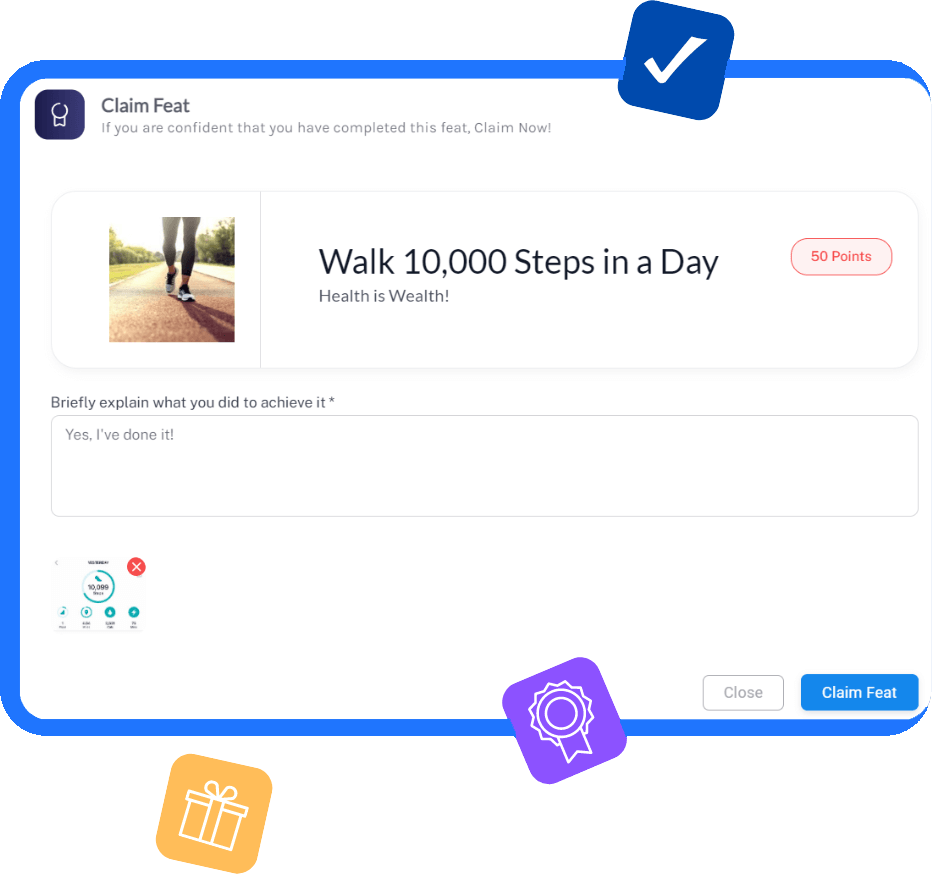
A shift-versus-shift challenge in BRAVO Feats turns a shared goal into a friendly contest. BRAVO’s team challenges are built for this kind of team goal.
Pick a goal such as hazard reports logged, not raw output. A race on output pushes crews to hand over messy lines.
19. Weekend and holiday coverage thank-yous
- Owner: Plant manager · Cost: Low · Cadence: Per event
Weekend and holiday crews give up time that others keep. A meal, a handwritten note from the plant manager or a day of flexibility tells them the plant noticed.
Do it the same week, while the effort is fresh. A thank-you a month later reads like a form letter.
Skills, improvement and tenure recognition ideas
Skills, improvement and tenure recognition helps a plant keep experienced workers and helps new hires last past their first year. These six ideas reward growth, not only output.
20. Kaizen idea of the month
- Owner: Continuous-improvement lead · Cost: Points-funded · Cadence: Monthly
A kaizen idea of the month recognizes the floor-level improvement that saves time, waste or risk. Award points when the team adopts the idea, not only when someone submits it.
Adoption shows workers that the plant acts on what they suggest. Submissions tend to follow.
21. Cross-training milestones
- Owner: Supervisor and trainer · Cost: Free · Cadence: Per sign-off
Cross-training milestones recognize each new station a worker signs off on. Mark the milestone on the skills matrix and thank the worker in the huddle.
Workers with more skills cover absences, so the plant gains as much as the worker does. Share the updated matrix with the crew so skills are visible, not buried in a file.
22. Mentor-of-new-hire recognition
- Owner: Shift supervisor · Cost: Free · Cadence: First 90 days
Mentor recognition thanks the worker who guides a new hire through the first 90 days. SHRM (April 2025) reported that the first year is the riskiest period for deskless workers, especially in manufacturing.
A mentor’s thanks costs nothing. It also puts a name on the person who owns the new hire’s start.
23. Work anniversary and service awards
- Owner: HR lead · Cost: Points-funded · Cadence: Automated

Anniversary and service awards mark tenure so nobody’s milestone passes unnoticed. BRAVO’s milestone recognition covers work anniversaries, so supervisors don’t track dates by hand.
Add a personal note from the direct supervisor. The note is what workers remember. Mark longer tenures with something larger than a message.
24. Plant Star awards and nominations
- Owner: HR lead and plant manager · Cost: Points-funded · Cadence: Quarterly

A Plant Star award lets workers nominate peers each quarter for the contribution that mattered most. BRAVO’s awards and nominations feature supports peer nominations.
Publish the criteria first so the result feels fair. Name the behavior each winner showed. Announce winners at the huddle so the whole crew hears the reason.
25. Team-level production milestone celebrations
- Owner: Plant manager · Cost: Low · Cadence: Per milestone
Team-level milestone celebrations recognize a line or shift when it hits a shared target. Individual quota awards favor workers on easier stations.
A shared celebration, such as a catered lunch, credits everyone who made the number possible. It also keeps one strong line from carrying all the credit.
How to launch employee recognition in manufacturing in 90 days
A plant can launch employee recognition in manufacturing in 90 days. It needs one owner per shift, three target behaviors and a coverage report by shift. Start small, because a tight pilot teaches more than a plant-wide rollout.
- Name one recognition owner for each shift.
- Pick three behaviors to recognize, such as hazard reports, quality catches and mentoring.
- Choose five ideas from this guide, mixing free and points-funded ones.
- Set a monthly budget with the points calculator.
- Run a 30-day pilot on one line or one shift.
- Review coverage by shift, then expand to the next line.

A structured employee recognition program keeps these steps consistent across lines and shifts.
Budget: estimate points before you buy
A plant budgets recognition by estimating monthly points per worker and checking that figure against its plan. BRAVO’s reward points calculator helps estimate how many points a team needs each month.

Of the 25 ideas in this guide, 13 cost nothing beyond supervisor time. That leaves 7 points-funded ideas and 5 low-cost ones for the budget. Check pricing on the BRAVO pricing page before you set a headcount budget.
Metrics to track
Four metrics show whether recognition reaches the floor and moves outcomes. Each one has a fixed calculation and a data source.
| Metric | How to calculate it | Data source |
|---|---|---|
| Coverage by shift | Workers recognized at least once in 30 days ÷ workers on that shift | Platform report |
| Giver rate | Workers who sent recognition ÷ headcount | Platform report |
| Hazard-report volume | Reports logged per month, per shift | EHS log |
| First-year turnover | Hires who left within 12 months ÷ hires in the period | HRIS |
Coverage by shift is the first number to check. A healthy plant-wide average can hide a night crew nobody thanks, so assign that shift an owner before you expand.
Mistakes that sink plant recognition programs
Favoritism is the first mistake. Recognizing only high-output lines teaches other crews the program isn’t for them. Rotate givers and watch coverage by line.
Delay is the second. Praise that arrives a month late reads like a form letter, so thank workers within the shift.
Generic praise is the third. “Good job” names nothing, while “thanks for stopping line 3 before that batch shipped” names the action.
The fourth mistake is rewarding injury-free streaks as the main safety incentive. Streaks reward silence.
Where BRAVO fits manufacturing teams, and where it may not
BRAVO fits plants that want peer recognition, milestones, awards and team challenges on phones and inside Slack or Microsoft Teams. It’s a recognition and engagement platform, not a plant-floor system.
- BRAVO Points: peer and supervisor recognition with rewards
- BRAVO Feats: team challenges, such as shift-versus-shift goals
- BRAVO Voice: pulse feedback from each shift
- BRAVO Focus: goal tracking tied to plant targets
- Awards and milestones: nominations and anniversary recognition
What could be improved: I haven’t confirmed that BRAVO supports QR-code access, shared kiosks, SMS or offline recognition. This guide doesn’t count them as BRAVO features. Plants where workers don’t carry phones should check access options with any vendor, BRAVO included, before committing.
BRAVO Voice can ask every shift the same short pulse questions. The answers show whether night crews feel as recognized as day crews. BRAVO Focus then ties plant goals, such as safety-walk completion, to the behaviors you recognize.
A plant whose workers have no phones and no shared devices needs a card-based or kiosk-based route first. In that case, run the free ideas on paper and add a platform once access exists.
The 13 free ideas need only supervisors, a shift board and tools you already use. I’d start there, add one points-funded idea and measure coverage by shift before buying anything else.
Final takeaway: start with five ideas and check every shift
Employee recognition in manufacturing works when it reaches every shift in the same week the work happens.
Pick five ideas from this guide. Choose two safety behaviors, one peer idea, one night-crew idea and one skills or tenure milestone. Run them for 30 days and check coverage by shift.
Skip streak counters as your main safety reward. Recognize the report, the stop and the teaching instead. Then review which names never appear on the shift board.
Want to see how this runs for a multi-shift team? Book a free BRAVO demo and walk through BRAVO Points, BRAVO Feats and the mobile app. Bring your own shift pattern.
Frequently asked questions
Use channels that don’t need email: a huddle thank-you, a printed card, a shift-board entry or a phone app. Pick two channels so every worker is reachable, including night crews. Confirm that digital options work on shared or personal devices first.
A plant should recognize hazard reports, quality catches, teaching new hires, cross-training sign-offs and adopted improvement ideas. These behaviors protect safety and quality, and workers control them. Recognizing them alongside output keeps crews from chasing speed at the expense of the line’s health.
Reward behaviors instead of injury-free periods, because streaks can push minor injuries underground. Recognize hazard reports, safety-walk participation and toolbox-talk contributions, which workers control. OSHA’s rule at 29 CFR 1904.35 bars practices that discourage injury reporting, so check safety incentives with EHS.
Supervisors should name at least one worker in each shift huddle. Over a month, that covers most of a small crew. Larger crews need peer recognition as well, so track coverage by shift to find workers who never get named.
Start with each idea’s cost level for a 200-person plant: free, low or points-funded. In this guide, 13 of 25 ideas cost nothing beyond supervisor time. Estimate monthly points with BRAVO’s reward points calculator, then check the pricing page for current plans.
Calculate coverage by shift: workers recognized at least once in 30 days divided by workers on that shift. Add giver rate, hazard-report volume and first-year turnover. Pull the first two from your recognition platform, the third from the EHS log and the fourth from your HRIS.

He is an SEO strategist and content writer focused on employee engagement and SaaS marketing. He creates data-driven content that ranks on Google and AI search while helping businesses improve motivation, productivity, and retention.


