

Most companies invest heavily in training employees, but many forget that managers need support too. When managers lack the right tools, guidance, and feedback systems, even the best teams struggle to perform.
In this guide, you’ll learn what manager enablement is, why it matters, and how to build a system that helps managers lead with confidence.
Key Takeaways
- Manager enablement is the process of providing managers with the tools, training, and support needed to lead teams effectively.
- Effective manager enablement improves employee engagement, productivity, and retention across the organization.
- A strong manager enablement strategy includes training, feedback systems, performance tools, and recognition programs.
- Organizations that support managers consistently perform better than those that rely only on one-time training.
- Manager enablement requires continuous improvement, not a one-time initiative.
- Modern workplaces use employee engagement platforms and performance tools to support manager success.
- A structured manager enablement plan helps companies build stronger leaders and healthier workplace culture.
What Is Manager Enablement in HR and Leadership?
Manager enablement is the process of giving managers the training, tools, systems, and ongoing support they need to lead teams effectively.
In modern organizations, being promoted to a manager is not enough. Managers must handle performance reviews, employee engagement, communication, goal tracking, and team motivation at the same time. Without structured support, most managers struggle to succeed.

Manager enablement focuses on continuous support instead of one-time training. It includes:
- Manager training programs
- Leadership development frameworks
- Employee engagement tools
- Performance management systems
- Feedback and survey platforms
Manager enablement involves continuous training, performance tools, feedback systems, and recognition programs that help managers succeed in their roles.
For example, instead of sending a manager to a single workshop, companies provide ongoing coaching, dashboards, surveys, and recognition systems to help them improve daily.
Improve Managers Faster
Give managers the tools they need to lead better teams with BRAVO’s engagement, feedback, and recognition platform.
Book a Free DemoWhy Is Manager Enablement Important for Employee Engagement?
Manager enablement is important because managers directly influence employee engagement, productivity, and retention.
Research shows that managers have the biggest impact on how employees feel about their work.
- Managers account for 70% of the variance in employee engagement
- Only 21% of employees globally are engaged at work
- Employees with engaged managers are 59% more likely to be engaged
Because of this, companies cannot improve engagement without supporting managers.
For example, when organizations use employee engagement software, managers can track team mood, feedback, and performance in real time.
At the same time, strong manager enablement also improves culture. If you want a deeper understanding, read our workplace culture guide.
Organizations with strong manager enablement programs often see higher employee engagement, better productivity, and lower turnover.
How Is Manager Enablement Different From Manager Training?
Manager enablement is different from manager training because it provides ongoing support instead of one-time learning sessions.
Many companies believe training is enough. It is not.
| Feature | Manager Training | Manager Enablement |
|---|---|---|
| Duration | One-time | Continuous |
| Focus | Skills | Skills + tools + systems |
| Support | Limited | Ongoing |
| Measurement | Rare | Regular |
| Goal | Learning | Performance improvement |
For example, a training program may teach feedback skills, but manager enablement provides:
- Feedback tools
- Survey systems
- Coaching sessions
- Performance dashboards
This is why manager enablement is part of a complete leadership enablement strategy, not just a course.
What Are the Key Components of Manager Enablement?
The key components of manager enablement include training, tools, feedback systems, recognition programs, and performance support.
A strong manager development framework always includes multiple layers of support.
Training & Development
Manager training programs teach communication, coaching, and leadership skills.
For example, companies run people manager training sessions every quarter instead of once per year.

Tools & Technology
Managers need systems to track performance and engagement.
Examples:
- Goal tracking software
- Performance dashboards
- Survey tools
- Communication platforms
For example, using OKR software for employees helps managers align team goals with company objectives.
Feedback Systems
Managers improve faster when they get regular feedback.
This includes:
- 360° feedback
- Employee surveys
- One-on-one check-ins
Tools like employee feedback system make this process simple.

Recognition & Motivation
Recognition increases motivation and engagement.
Companies use:
- Rewards programs
- Peer recognition
- Manager shout-outs
For example, a structured employee recognition program helps managers appreciate team effort.
You can also explore a full rewards and recognition program to support motivation.
Performance Management Support
Managers need help tracking results.
Using employee performance tracking allows leaders to measure progress without manual work.
A successful manager enablement strategy includes clear goals, the right technology, regular feedback, and measurable performance outcomes.

How Do You Build a Manager Enablement Strategy?
A manager enablement strategy is a structured plan that helps organizations support managers through training, tools, and continuous improvement.
Follow this step-by-step framework.
Step 1 — Assess Manager Needs
First, identify where managers struggle.
Examples:
- Communication issues
- Low engagement scores
- Poor performance reviews
Use surveys and analytics to collect data.
Step 2 — Define Clear Goals
Second, decide what success looks like.
Goals may include:
- Improve engagement by 15%
- Reduce turnover
- Increase productivity
Clear goals make enablement measurable.
Step 3 — Provide Training
Third, run structured manager development programs.
Topics include:
- Coaching skills
- Conflict resolution
- Team motivation
You can also follow these team motivation strategies to support learning.

Step 4 — Implement Tools
Fourth, give managers the right systems.
Examples:
- Engagement platforms
- Performance software
- Survey tools
Without tools, training does not work.
Step 5 — Measure Performance
Fifth, track results regularly.
Metrics:
- Engagement score
- Productivity
- Retention
- Feedback ratings
Step 6 — Improve Continuously
Finally, update the program based on data.
Manager enablement is not a one-time project.
It is a long-term system.
What Are Examples of Manager Enablement in Organizations?
Manager enablement in organizations means providing managers with the tools, training, and support systems they need to lead teams effectively every day. In modern workplaces, manager enablement is not limited to leadership training.
It includes employee engagement tools, performance management systems, feedback platforms, and leadership coaching programs that help managers improve team performance and productivity.
Research shows that managers strongly influence engagement and results, with leadership quality affecting most team outcomes.
Below are common manager enablement examples used in high-performing organizations.
Example 1 — Employee Engagement Platform
Managers use employee engagement platforms and pulse surveys to track team morale, identify problems early, and improve communication. Regular feedback helps managers make better decisions and keeps employees more engaged.
Example 2 — Employee Recognition Program
Recognition programs allow managers to reward employees publicly for achievements, which increases motivation and strengthens workplace culture. Companies that use structured recognition systems often see higher engagement and retention.
Example 3 — Performance Management Dashboard
Performance management tools help managers monitor goals, KPIs, and productivity in real time. With clear performance data, managers can coach employees more effectively and align team work with business objectives.
Example 4 — Leadership Coaching and Manager Training
Organizations provide ongoing leadership coaching, manager training programs, and development frameworks to help managers improve communication, decision-making, and team leadership skills. Continuous coaching is a key part of a strong manager enablement strategy.
Example 5 — Feedback and Survey Systems
Modern companies use employee feedback systems and engagement surveys so managers can understand employee needs and adjust their leadership approach. Frequent feedback leads to better manager effectiveness and stronger team performance.
Companies that implement these manager enablement tools and strategies usually achieve better engagement, higher productivity, and stronger workplace culture because managers feel supported instead of overwhelmed.
What Tools Help With Manager Enablement?
Manager enablement tools like BRAVO are platforms that help managers track performance, engagement, feedback, and goals in one place.
Common categories:
| Tool Type | Purpose |
|---|---|
| Employee engagement platform | Track team mood |
| Recognition software | Reward employees |
| Performance management tool | Track goals |
| Survey & feedback tool | Collect input |
| OKR software | Align objectives |
Examples of useful tools:
- Engagement platforms
- Feedback systems
- Recognition tools
- Performance dashboards
Using employee engagement surveys helps managers understand what employees really think.
How BRAVO Helps Manager Enablement
BRAVO supports manager enablement by providing:
- Recognition tools
- Engagement surveys
- Goal tracking
- Feedback systems
- Performance insights
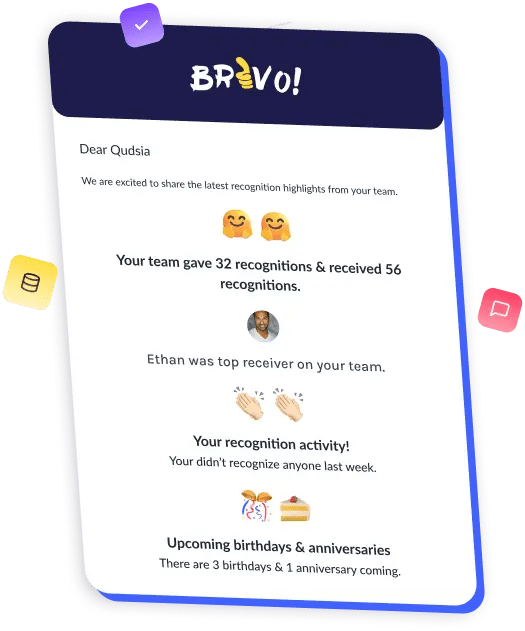
With BRAVO, managers can lead with data instead of guesswork.
How Does Manager Enablement Improve Team Performance?
Manager enablement improves team performance by giving managers clarity, tools, and support to lead effectively.
When managers feel supported:
- Communication improves
- Goals become clear
- Feedback becomes regular
- Motivation increases
Studies show poor management leads to disengagement and productivity loss.
Disengaged managers can cost companies billions due to low performance.
Because of this, companies that invest in leadership enablement see stronger results.
What Are the Best Practices for Supporting Managers?
Best practices for manager enablement focus on consistency, measurement, and continuous improvement.
Best practices:
- Train managers regularly
- Provide real-time tools
- Use engagement surveys
- Reward good leadership
- Track performance data
- Offer coaching
Following these leadership development tips helps managers grow faster.
How Can HR Teams Implement Manager Enablement Successfully?
HR teams can implement manager enablement successfully by combining training, technology, and feedback into one system.
Checklist:
- Audit manager skills
- Choose tools
- Train leaders
- Track engagement
- Improve monthly
Companies that treat manager enablement as a system — not a program — get the best results.
Next Steps: How to Start Manager Enablement in Your Organization
Starting manager enablement requires a clear plan, the right tools, and consistent support.
Action roadmap:
- Measure engagement
- Identify manager gaps
- Train managers
- Add performance tools
- Track results
- Improve monthly
Small steps create big change.
Conclusion – The Future of Manager Enablement
Manager enablement is the foundation of modern leadership and high-performing teams.
Companies that only train employees fall behind. Companies that support managers win.
When managers have the right tools, feedback, and recognition systems, teams become more engaged, productive, and motivated.
BRAVO helps organizations build strong manager enablement systems with engagement surveys, recognition programs, performance tracking, and feedback tools.
Book a demo with BRAVO to see how manager enablement can transform your team.
FAQs
An enablement manager is a professional responsible for equipping teams — especially managers or sales/operations teams — with the tools, training, and resources they need to perform at their best. This role focuses on improving workflows, skills alignment, and outcomes by designing systems that help others succeed. Enablement managers often work closely with HR, learning and development, and operations teams.
The 70‑20‑10 rule in leadership development is a framework suggesting that 70% of learning comes from on‑the‑job experiences, 20% from social interactions like coaching or mentoring, and 10% from formal training or coursework. It emphasizes that most leadership capabilities are developed through real work and relationships, not just classroom instruction.
One useful framework for understanding successful performance management emphasizes the five key components: creation, comprehension, communication, collaboration, and confrontation. These represent the essential skills and activities needed to lead teams effectively, from defining roles and expectations (creation) to addressing issues directly (confrontation).
The 30‑60‑90 rule describes a common onboarding and performance strategy where managers set clear goals for an employee’s first 30, 60, and 90 days. Each phase establishes objectives that expand in complexity — from learning and integration (first 30 days) to execution and contribution (next 60–90 days).
There are different leadership frameworks described as “5 C’s.” One common interpretation breaks leadership success down into clarity, commitment, communication, courage, and character — qualities that help leaders articulate vision, stay perseverant, lead teams boldly, and build trust.
The 80‑20 rule, also known as the Pareto Principle, states that roughly 80% of outcomes result from 20% of causes. In management, this means a small portion of effort, tasks, or behaviors often drive most team results — so focusing on the “vital few” priorities yields the biggest impact.
The 3 C’s of leadership framework highlights character, competence, and commitment as core traits leaders must demonstrate.
– Character builds trust
– Competence ensures capability
– Commitment drives execution

He is an SEO strategist and content writer focused on employee engagement and SaaS marketing. He creates data-driven content that ranks on Google and AI search while helping businesses improve motivation, productivity, and retention.


