

Recognizing coworkers is one of the simplest and most effective ways to build a healthy workplace culture. If you’re wondering how to recognize coworkers in a meaningful, consistent, and motivating way, you’re not alone. Many professionals struggle with acknowledging a colleague’s contributions, identifying the right moment to appreciate someone, or finding the right words to express gratitude. Yet recognition is a powerful driver of engagement, morale, performance, and teamwork.
Coworker recognition is more than saying “good job.” It’s about acknowledging contributions, visible and invisible efforts, personal growth, and everyday behaviors that make work better for everyone. Whether you’re a manager, a team lead, or a peer who wants to show appreciation, recognizing contributions helps people feel valued, respected, and connected to their work.
This guide breaks down how to recognize coworkers in simple steps while building a recognition culture that supports collaboration, productivity, and employee experience.
Why Recognizing Coworkers Matters
Recognizing coworkers has a direct and measurable impact on engagement, retention, wellbeing, and collaboration. When people feel seen and appreciated, they show more commitment, generate better ideas, and contribute more actively to team goals. Recognition creates psychological safety, encourages positive behaviors, and reduces workplace stress.
Employees who receive regular appreciation are significantly more motivated and more likely to go above and beyond. Recognition also builds trust and strengthens peer relationships. It improves how teams communicate, solve problems, and support each other. When recognition becomes a habit, the workplace becomes more human, connected, and resilient.
A simple word of appreciation can reinforce good work, celebrate progress, and energize a team. This is why recognition should be a consistent practice, not a one-time event. Small moments of appreciation build a strong foundation of morale and mutual respect.
Recognition also influences organizational performance. Teams that recognize each other more frequently create better outcomes, adopt healthier communication patterns, and maintain higher levels of focus. A culture of appreciation makes people feel proud of their contributions and increases satisfaction across the workplace.
Types of Contributions You Should Recognize
Understanding what to recognize is just as important as knowing how to recognize coworkers. Contributions come in many forms. Some are visible and measurable, while others are subtle, supportive, and often overlooked. Recognizing all types of contribution shows fairness, strengthens morale, and promotes a balanced work culture.

Visible and Tangible Contributions
These are achievements you can see clearly — completed projects, solved problems, successful campaigns, or delivered tasks. When someone leads an initiative, surpasses targets, or handles a difficult assignment, it deserves recognition. These contributions often reflect effort, skill, responsibility, and ownership.
Public recognition works well for visible achievements. Sharing the win during team meetings, newsletters, or digital channels reinforces positive behavior and motivates others. These moments inspire a culture of excellence and create role-model behaviors within the team.
Less Visible Efforts
Many contributions happen behind the scenes. These include helping a coworker, maintaining team harmony, supporting onboarding, stepping up during emergencies, sharing knowledge, or offering guidance during challenging phases. These efforts often go unnoticed because they do not come with metrics or direct recognition.
Acknowledging invisible work builds trust and fairness. It helps coworkers feel seen and respected. Personalized recognition — like a one-on-one note or a private message — works well for these contributions. Highlighting soft skills and emotional labor reinforces empathy and teamwork.
Build a Culture of Recognition with BRAVO
Strengthen teamwork, boost productivity, and simplify appreciation with automated peer-to-peer recognition, performance tracking, and real-time rewards.
Book a Free DemoPersonal and Professional Growth
Growth is an important contribution. Employees who take initiative, learn new tools, acquire new skills, or improve their communication add significant value. Recognizing progress encourages continuous learning and reinforces the behaviors that lead to long-term success.
Whether someone embraces change, steps out of their comfort zone, or transitions into a new responsibility, acknowledging their growth strengthens confidence and encourages others to follow similar development paths.
7 Steps on How to Recognize Coworkers Effectively
Recognizing coworkers becomes easier when you follow a clear and practical approach. These steps show you how to acknowledge a colleague’s contributions in a way that feels genuine, meaningful, and consistent.
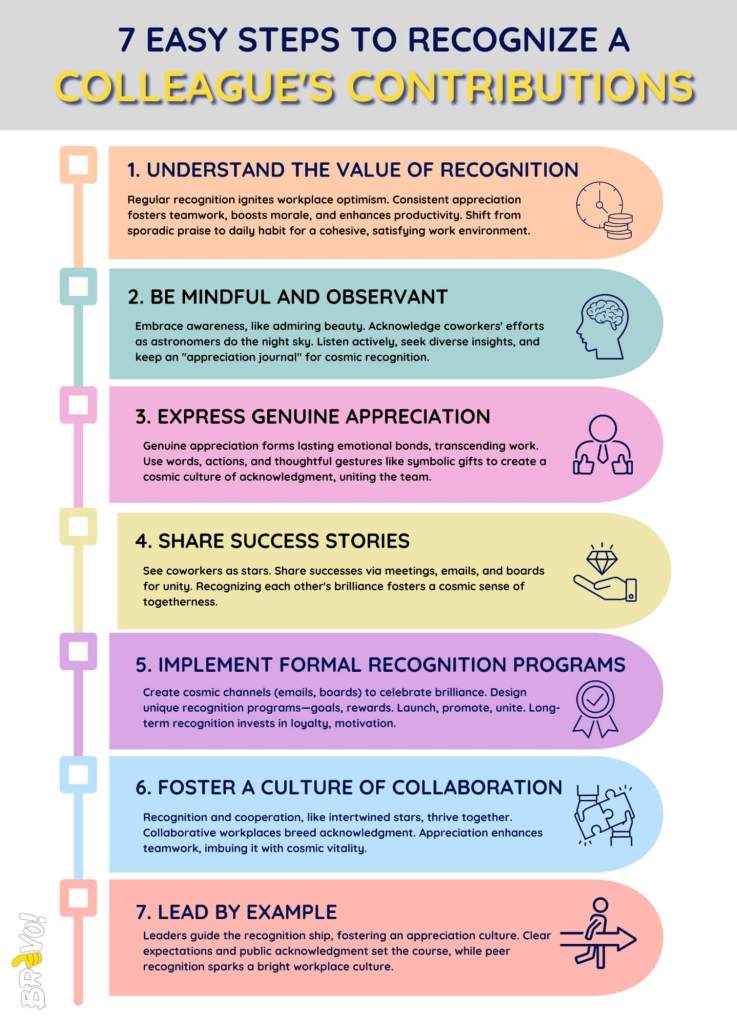
Step 1: Understand the Value of Recognition
Recognition boosts morale, strengthens team spirit, and drives motivation. When you recognize coworkers for their achievements, contributions, or effort, it signals that their work matters. This increases their sense of accomplishment and fuels their willingness to contribute again.
Recognition should be regular, not rare. Making appreciation part of daily work interactions ensures everyone feels valued, not just a select few. When recognition is consistent, the team becomes more connected, engaged, and focused on shared goals.
Step 2: Be Mindful and Observant
Effective recognition starts with awareness. Pay attention to responsibilities, tasks, teamwork, and behaviors that support progress. Attend meetings, observe collaboration patterns, and listen actively to understand how people impact the team.
Stay alert to small improvements, extra effort, or supportive actions. Not every contribution is large or visible, but many are meaningful and important in keeping a team functioning. Being observant helps you identify moments worth recognizing.
A helpful habit is keeping a short notes list — an “appreciation log.” Write down moments when coworkers show initiative, support, or effort. When recognition time comes, you can be specific and accurate, which makes appreciation feel real and thoughtful.
Step 3: Express Genuine Appreciation
Authentic appreciation strengthens trust and fosters stronger relationships. When recognizing a colleague’s contributions, be specific about what they did and why it matters. Avoid generic phrases. Mention the action, the impact, and the value.
Appreciation can be expressed in multiple ways:
- Verbal recognition during meetings
- Written messages via email or chat
- Peer-to-peer recognition walls
- Thank-you notes
- Personal conversations
Recognition doesn’t need to be extravagant. Small gestures, when genuine, create deep connections and positive energy.
Step 4: Share Success Stories
Sharing recognition publicly increases its impact. It highlights behaviors worth repeating and spreads positivity across the workplace. Use communication channels like meetings, newsletters, Slack, Microsoft Teams, or your recognition platform to share wins.
Public acknowledgment builds a culture where success is celebrated openly. It motivates others to participate, collaborate more, and strive for excellence. It also shows transparency and fairness, which are essential for team morale.
Documenting stories of success also helps teams learn from each other. It preserves good practices and reinforces the contributions that shape progress.
Step 5: Implement Formal Recognition Programs
While informal recognition is powerful, formal programs provide structure and consistency. They reinforce the importance of recognition at an organizational level. A structured system ensures recognition is fair, trackable, and transparent.
Formal programs may include:
- Monthly or quarterly recognition awards
- Milestone and achievement badges
- Peer nomination systems
- Points-based reward platforms
- Public acknowledgment boards
A well-designed recognition system sets clear criteria, encourages participation, and offers rewards that feel meaningful. It ensures that recognition is not dependent on personality or preferences but accessible to everyone.
Step 6: Foster a Culture of Collaboration
Recognition thrives in a collaborative environment. When teams support each other, share responsibilities, and contribute to shared goals, appreciation becomes natural. Collaboration creates awareness of each other’s challenges, strengths, and contributions.
Encourage knowledge-sharing, team brainstorming, mutual feedback, and cross-functional support. When employees see the benefits of collaboration, they recognize coworkers more openly and willingly. Recognition, in turn, reinforces the behavior, creating a healthy cycle.
Collaboration also reduces silos and improves organizational efficiency. It helps people feel connected, supported, and aligned with the company’s mission.
Step 7: Lead by Example
Leaders influence recognition culture more than anyone else. When managers actively recognize coworkers, employees follow. Leadership recognition sets expectations, shapes culture, and signals what the organization values.
Lead by acknowledging contributions consistently, accurately, and transparently. Advocate for recognition during meetings, highlight employee success stories, and support programs that encourage appreciation across teams.
Encourage employees to recognize each other, not just look to leadership for acknowledgment. When leaders model recognition behavior, it becomes a shared habit and a defining feature of the company culture.
Real Examples of How to Recognize Coworkers
Recognition becomes stronger when it includes real-life examples. Here are practical ways to appreciate coworkers in different situations:
1. Project Completion Example
“Thank you for taking ownership of this project and delivering high-quality work. Your focus and persistence made a big difference.”
2. Collaboration Example
“I appreciate how you supported the team this week. Your coordination helped us solve challenges faster.”
3. Innovation Example
“Your idea helped us improve our system. Thank you for thinking creatively and stepping forward.”
4. Going Above and Beyond
“Your extra effort ensured everything stayed on track. It means a lot to the entire team.”
5. Supporting Remote Employees
“Thank you for staying connected and contributing consistently. Your commitment is visible and valued.”
Formal vs. Informal Recognition: What’s the Difference?
| Type | Definition | Best For | Examples |
|---|---|---|---|
| Formal Recognition | Structured, trackable programs | Major achievements, milestones | Awards, certificates, reward points, nominations |
| Informal Recognition | Spontaneous appreciation | Daily contributions, supportive actions | Thank-you notes, quick messages, shout-outs |
Both forms are essential. Together, they create a balanced and fair recognition environment.
Using BRAVO to Support Coworker Recognition
BRAVO provides a structured, seamless, and engaging way to recognize coworkers by transforming appreciation from a manual effort into an automated, consistent, and transparent workplace practice. Instead of relying on sporadic messages or scattered acknowledgments, BRAVO centralizes every recognition moment into one simple, intuitive platform. This empowers teams to appreciate each other instantly while giving managers the visibility they need to understand how contributions flow across the organization.

One of BRAVO’s strongest advantages is its peer-to-peer recognition system, which allows employees to acknowledge colleagues effortlessly. Whether someone completes a project, supports a teammate, solves a problem, or demonstrates leadership behavior, BRAVO makes it easy to share appreciation with just a few clicks. Each recognition moment becomes a visible highlight within the organization, reinforcing positive behavior and shaping a genuine culture of appreciation.
The platform also offers automated workflows, helping managers and HR teams ensure recognition happens at the right time and in the right way. These workflows reduce administrative work and eliminate the inconsistency that often weakens recognition programs. BRAVO’s reward points system further enhances the experience by allowing teams to attach meaningful rewards to recognitions. Employees can accumulate points and redeem them for items that matter to them, creating a tangible link between effort and appreciation.
BRAVO’s team-wide appreciation boards give everyone a shared space to celebrate contributions publicly. These boards increase visibility, encourage collaboration, and help employees feel valued within the broader team. Meanwhile, managers gain access to real-time dashboards that show recognition trends, engagement patterns, top contributors, and team morale indicators. This insight helps leaders understand where extra support, guidance, or acknowledgment may be needed.
Ultimately, BRAVO turns recognition into a natural part of daily work, ensuring no effort goes unnoticed and every employee feels seen and appreciated. It empowers companies to build stronger relationships, elevate engagement, and create a workplace where recognition influences meaningful growth and connection.
Ready to Transform Your Workplace with Meaningful Recognition?
BRAVO helps companies build stronger teams, celebrate contributions, and improve employee engagement through effortless recognition tools.
Book a Free Demo and Experience BRAVO Today
FAQs
Use specific praise, thank-you messages, public shout-outs, or informal appreciation. Small gestures create strong motivation and reinforce positive behavior.
Acknowledge achievements, collaboration, effort, problem-solving, mentoring, and improvement. Use verbal, written, or platform-based recognition.
It boosts morale, motivation, teamwork, and engagement. Recognition helps employees feel valued and connected to their work.
Recognition should be regular and timely. Acknowledge contributions as they happen to reinforce good work and maintain positive energy.
Be specific, genuine, and timely. Mention the action, its impact, and how it helped the team or project succeed.


